Jazz Pioneers and Warriors – The Windrush Legacy
Posted on 6th Oct 2025 by Lily Ashley
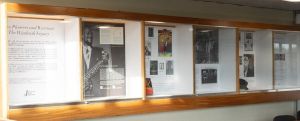
Jazz Pioneers and Warriors – The Windrush Legacy is an exhibition that explores the profound cultural contributions of the Windrush generation to British jazz.
Curated and developed by volunteers Paula Teo and Veronica Chou, the exhibition, housed at Loughton Library, presents a carefully researched narrative that highlights the artistic influence of figures such as Joe Harriott and The Jazz Warriors.
Through archival materials, personal artefacts, and multimedia elements, the exhibition offers a compelling reflection on identity, heritage, and bridges the past, present and future of jazz, inviting visitors to consider the enduring legacy of community-driven creativity.
We welcome you to read this interview between Lily, our Collections Associate at The National Jazz Archive, with both the curators of the exhibition, Paula and Veronica, offering you a behind the scenes glimpse of the exhibition process.
 |
What was the most interesting fact you found out during your research?
Veronica:
What struck me most in my research was realising how jazz isn’t just about sound but about belonging. I was stunned by the way it holds communities together across generations, building connections that influence culture and echo across time and place.
Paula:
Not sure there was any one fact, but I was intrigued to discover all the interconnections between the artists we researched, and especially how much of an impact Joe Harriott had on his fellow musicians and on the jazz scene at the time. And yet today he is hardly a household name. Hopefully the exhibition will introduce him to many more people.
What was the most challenging part about putting on an exhibition?
Veronica:
The most challenging part was choosing whose stories to tell. Paula and I wanted to include as many voices as possible, because every memory felt important to the larger narrative.
Paula:
The installation. Having done a lot of editorial/publications work in the past, I'm used to working with printers and designers and all the multiple rounds of review, editing, proof-checking etc, but I've never produced an exhibition before. It took a bit of trial and error to find the best materials for the backdrops and securing the displays.
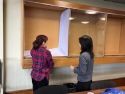
The installation stage also involved a lot of manual work like dismantling old cabinet backdrops, hanging lights, hoovering and cleaning. As volunteers, we were only in the archive for half a day each week, so this work stretched out over about three weeks.
One thing that surprised me was how material constraints shaped the exhibition content. We had to fit everything into six cabinets under 1m x 1m, and the portrait orientation limited our layout options. Digitising the archive material gave us more flexibility to include everything we wanted without sacrificing content.
Where did you start in your research process, and where did you end up?
Veronica:
I first came across Shake Keane’s poetry piece Volcano Suite online and was deeply moved by it. That led me on a research journey that eventually brought me to Joe Harriott and how the Windrush generation influenced the British jazz scene of today.
Read more about Shake Keane's work here
Paula:
I joined the project a bit later after expressing interest in public engagement activities. Veronica and Angela had already gathered material on Joe Harriott and the Jazz Warriors. I helped search for archive material on individual band members and found links to Jazz Jamaica, Tomorrow's Warriors, and artists like Camilla George.
The story emerged organically as we uncovered connections. It became clear that the thread linking these artists wasn’t a specific jazz style, but rather inspiration and cultural legacy—a continuity that began with Windrush and lives on through each new generation.
How did you choose which artefacts to use?
Veronica:
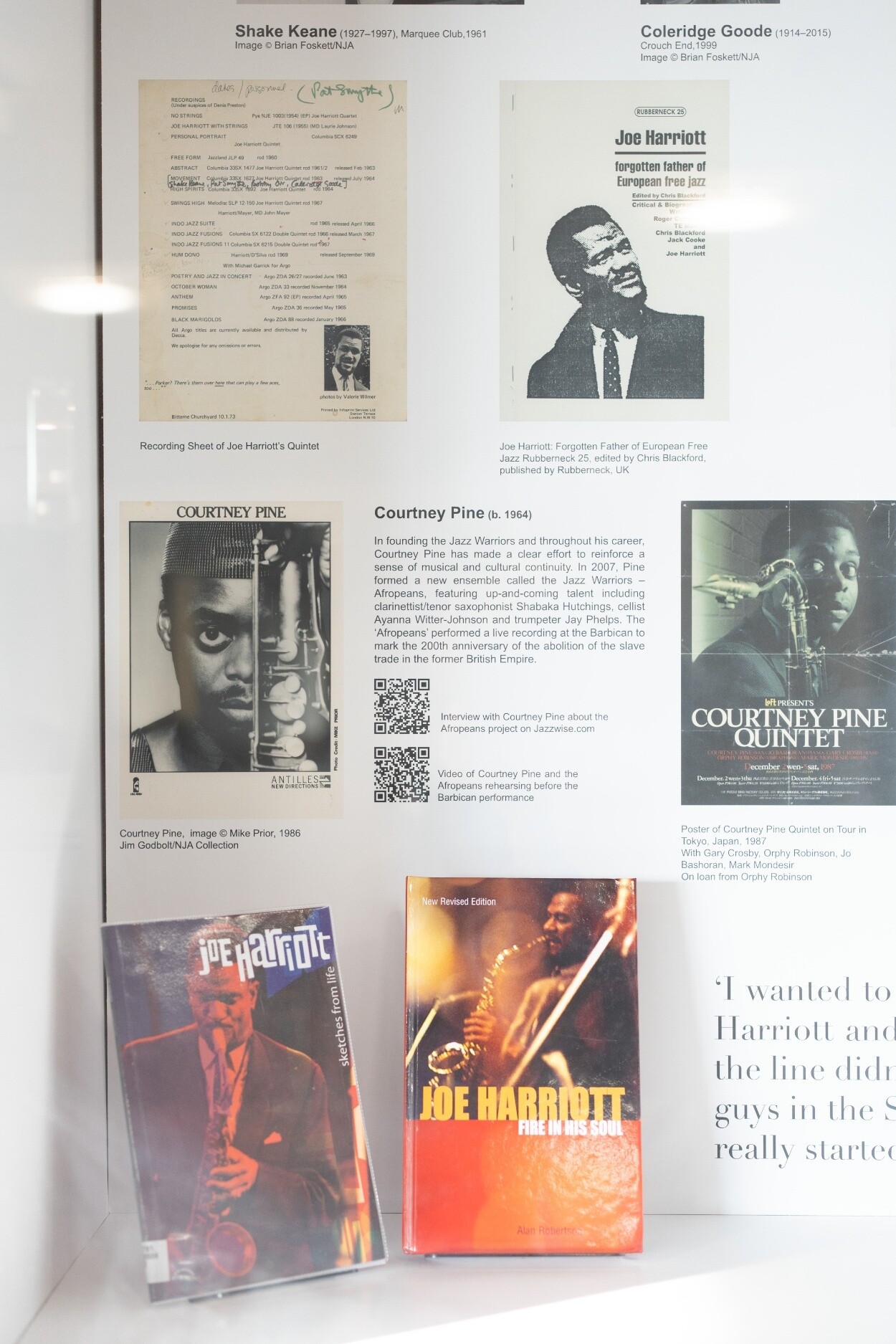
Choosing the artefacts was one of the hardest parts. We wanted to include as much as possible but had to think about what best conveyed the narrative. In the end, we chose pieces that spoke to both the personal journeys of the musicians and the cultural impact of the Windrush generation.
Paula:
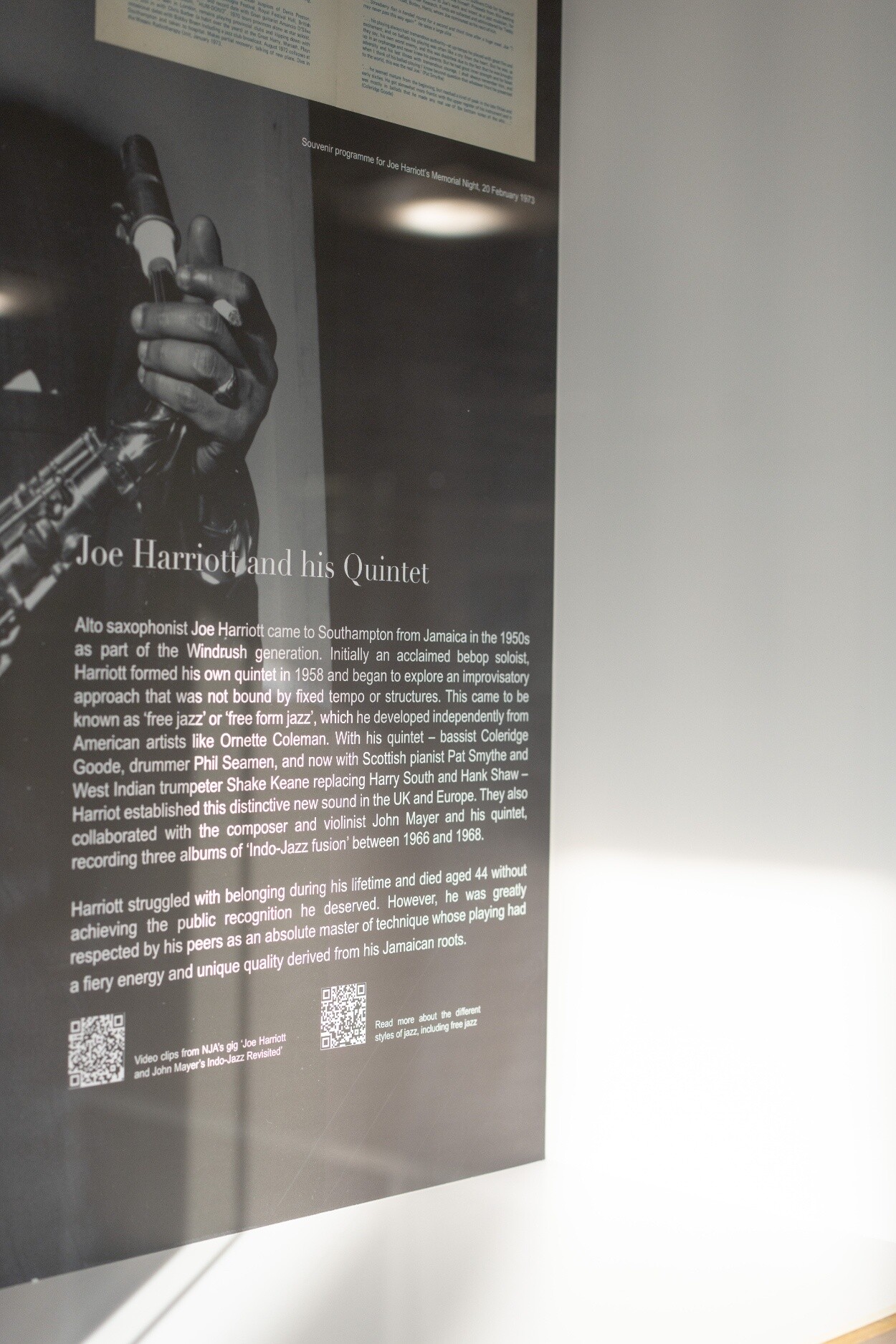
We searched the archive for material on Joe Harriott, the Jazz Warriors, Jazz Jamaica, and Tomorrow's Warriors. Where group material was limited, we looked for individual members. We also included promotional leaflets, Orphy Robinson’s personal items, and QR codes linking to audiovisual content. We selected images and objects that were visually striking and commented on cultural identity without being too text-heavy.
What are you most proud of with the exhibition?
Veronica:
What I’m most proud of is how the exhibition created a bridge between the archive and the community. People could see their own stories reflected back at them, and that sense of recognition felt very powerful.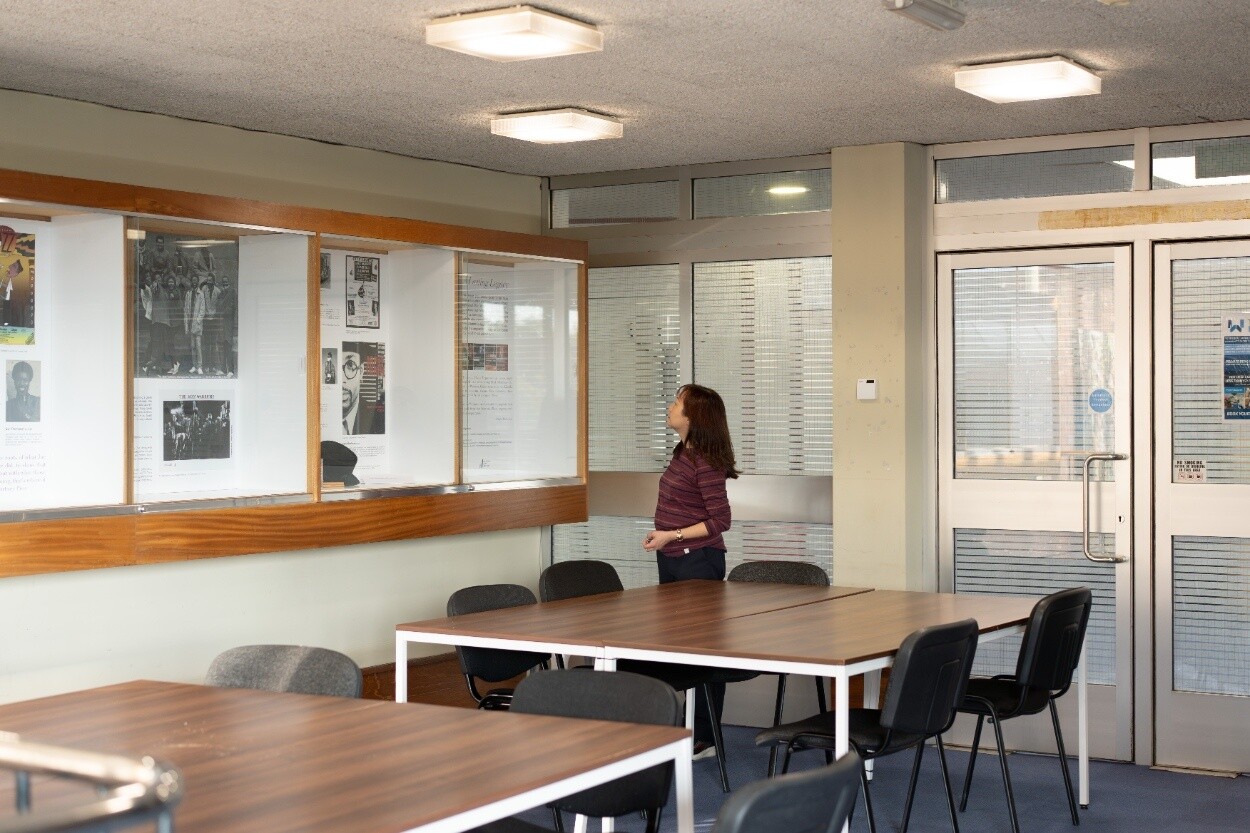
Paula:
I love how clean, contemporary and professional the panels look! Veronica did a beautiful job with the layout designs. The blown-up backdrops of Joe Harriott at the beginning and end give the story a visual anchor.
Although the exhibition is on a smaller scale (just six cabinets!), I feel we've captured a cohesive and insightful narrative that spans several decades. I hope audiences will be inspired to learn more about these artists—especially the lesser-known names—and that those with a Windrush connection will feel proud of the enormous talent their community represents.
The National Jazz Archive remains committed to preserving and sharing these stories, ensuring that the contributions of the Windrush generation continue to resonate within Britain’s cultural heritage.
We warmly invite visitors to experience the exhibition in person, located upstairs at Loughton Library, to explore the stories and artefacts on display, and discover the rich legacy of British jazz shaped by Windrush voices.